The Technology Behind Millie
Millie is built around ROS 2 Humble, giving the robot an open robotics foundation for connecting its movement, sensors, navigation, and higher-level AI systems.
For navigation, Millie uses LiDAR, depth sensing, mapping, and localization to understand and move through indoor spaces. A wireless tablet provides direct control of the robot and access to its mapping interface, while an onboard computer handles the software and AI workloads locally.
On top of ROS, we've added the conversational side of Millie. Modern AI models give the robot the ability to talk naturally, understand requests, and respond to what's happening around it. This allows the AI and the physical robot to work together rather than existing as two separate systems.
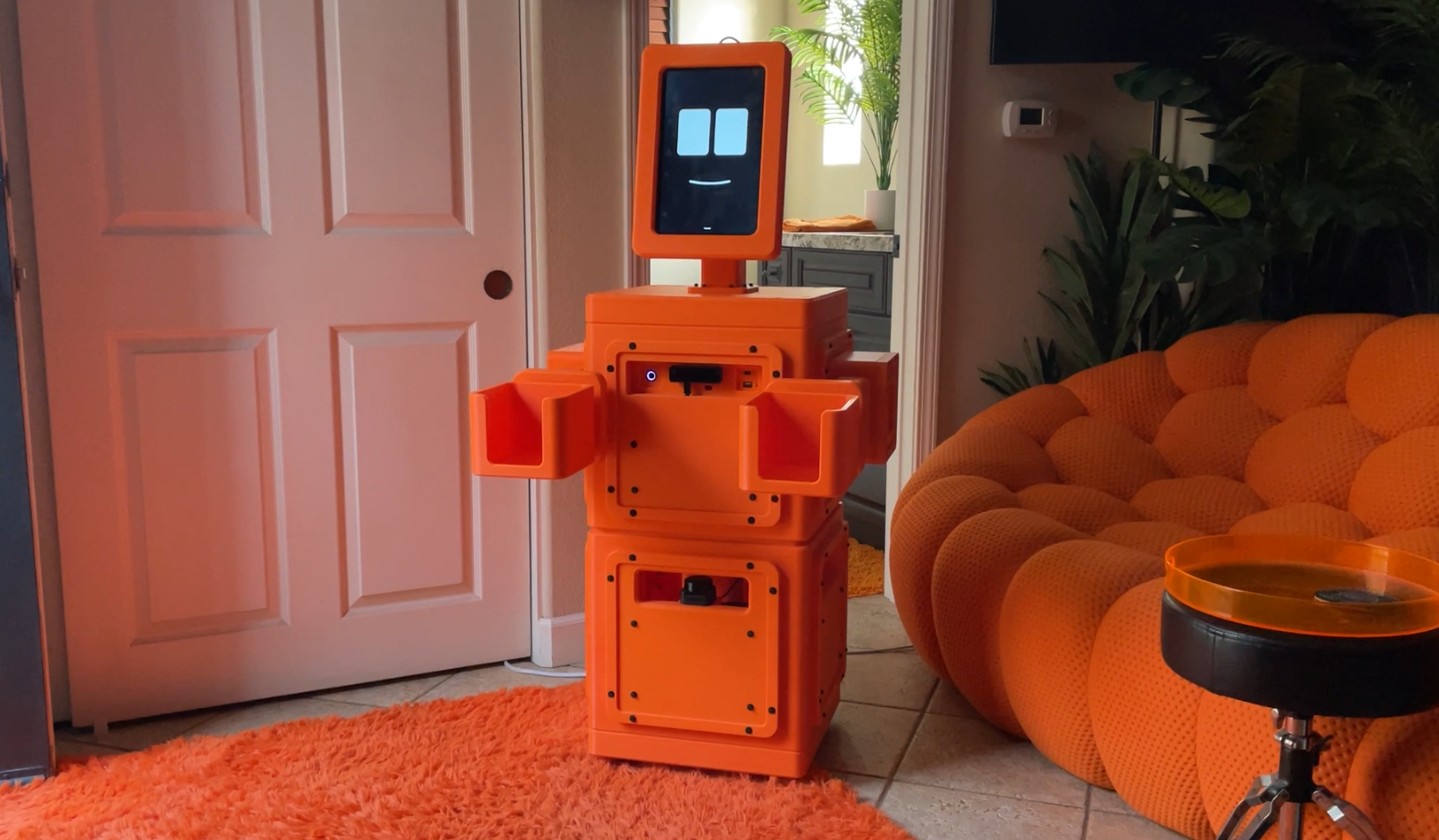
The hardware itself is designed around 3D-printed parts and readily available components rather than proprietary robotics hardware. Motors, sensors, cameras, computers, and other components can be replaced or upgraded as the technology evolves.
That modular approach is important to the project. Millie isn't designed as a finished, sealed appliance. It's a robotics platform that can continue to evolve as better AI models, sensors, and robotic capabilities become available.
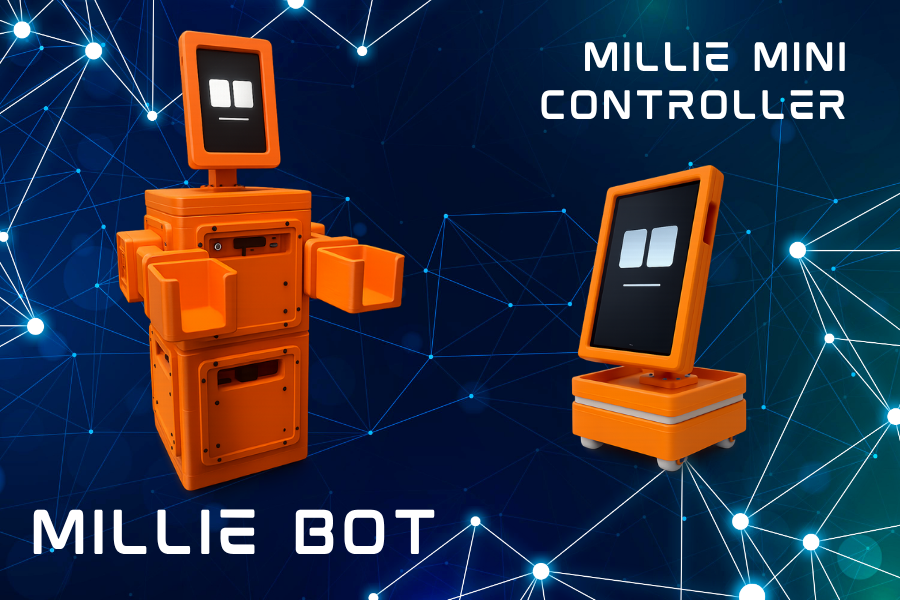
Millie also includes Millie Mini, a desktop AI companion that extends the experience beyond the physical robot. Millie Mini lets you interact with the same AI directly from your computer, while connecting into the broader Millie system. Along with the wireless tablet used for navigation, mapping, and robot controls, it gives you another way to interact with and manage Millie from your desktop.